
Dental Instruments
Dental instruments
Explore the Dental instruments through organized study materials.
Study Topics
Select a dental instrument to explore its detailed study material.

AYONET-STYLE SURGICAL FORCEPS
Design: Features an offset, bayonet-shaped shaft with two narrow gripping tips.
Material: Usually made of stainless steel.
Grip: Spring-action arms with serrated tips for secure handling.
Uses: Handling cotton, gauze, dressings and small materials.
Dental example: Placing cotton pellets or gauze in posterior regions of the oral cavity.
Advantage: Provides better visibility and access to narrow or deep working areas.

OPHTHALMIC LENS MANIPULATING HOOK (SINSKEY HOOK)
Design: Features a slender metallic shaft with a small, bent hook at the tip.
Material: Usually made of stainless steel.
Tip: Fine, curved tip designed for precise manipulation.
Uses: Positioning, rotating and manipulating intraocular lenses (IOLs).
Example: Adjusting the position of an artificial lens during cataract surgery.
Advantage: Provides precise control of the lens within the eye during ophthalmic procedures.

DENTAL MOUTH MIRROR
Design: Consists of a small, circular mirror attached to a long metallic handle.
Material: Usually made of stainless steel with a reflective glass or coated mirror surface.
Types: Available as plane and concave mirrors.
Uses: Indirect vision, retraction of cheeks and tongue, and illumination of oral structures.
Example: Examining posterior teeth and lingual surfaces during dental examination.
Advantage: Provides better visibility and access to difficult-to-see areas of the oral cavity.
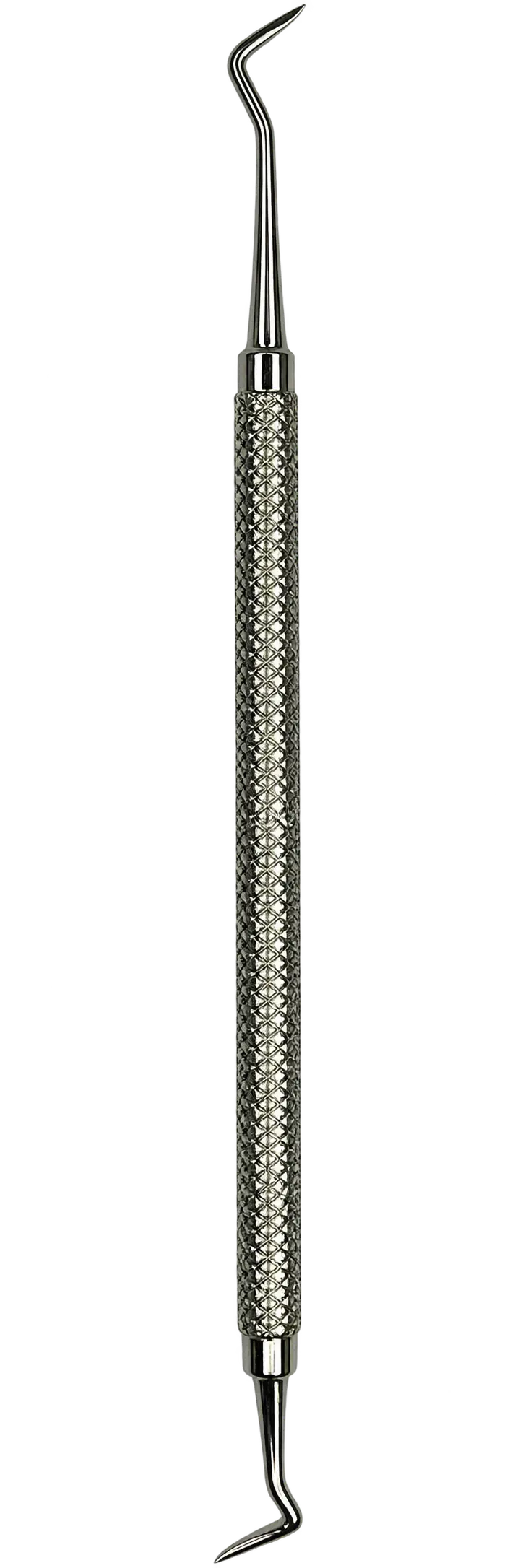
DENTAL SICKLE SCALER
Design: Features a pointed, sickle-shaped working end with a curved triangular cross-section.
Material: Usually made of stainless steel.
Tip: Sharp pointed tip with cutting edges on both sides.
Uses: Removing supragingival calculus (tartar) and plaque from tooth surfaces.
Example: Removing hard deposits around the necks of anterior teeth.
Advantage: Effectively removes tenacious calculus deposits, especially from interproximal areas.

DENTAL BALL BURNISHER
Design: Features a smooth, rounded, ball-shaped working tip attached to a long handle.
Material: Usually made of stainless steel.
Tip: Highly polished, smooth spherical or oval-shaped tip.
Uses: Smoothing, contouring and polishing dental restorative materials.
Example: Smoothing and adapting amalgam or composite restorations.
Advantage: Helps create smooth restoration surfaces and reduces surface irregularities.

DUAL-ENDED STAINLESS STEEL SPATULA / MIXING TOOL
Design: Features a long metallic handle with two different working ends.
Material: Usually made of stainless steel.
Tips: Typically has flat, narrow or slightly curved spatula-shaped ends.
Uses: Mixing, spreading and handling dental materials.
Example: Mixing dental cement, temporary filling materials or restorative materials.
Advantage: Provides convenient handling and mixing of materials with precision and control.
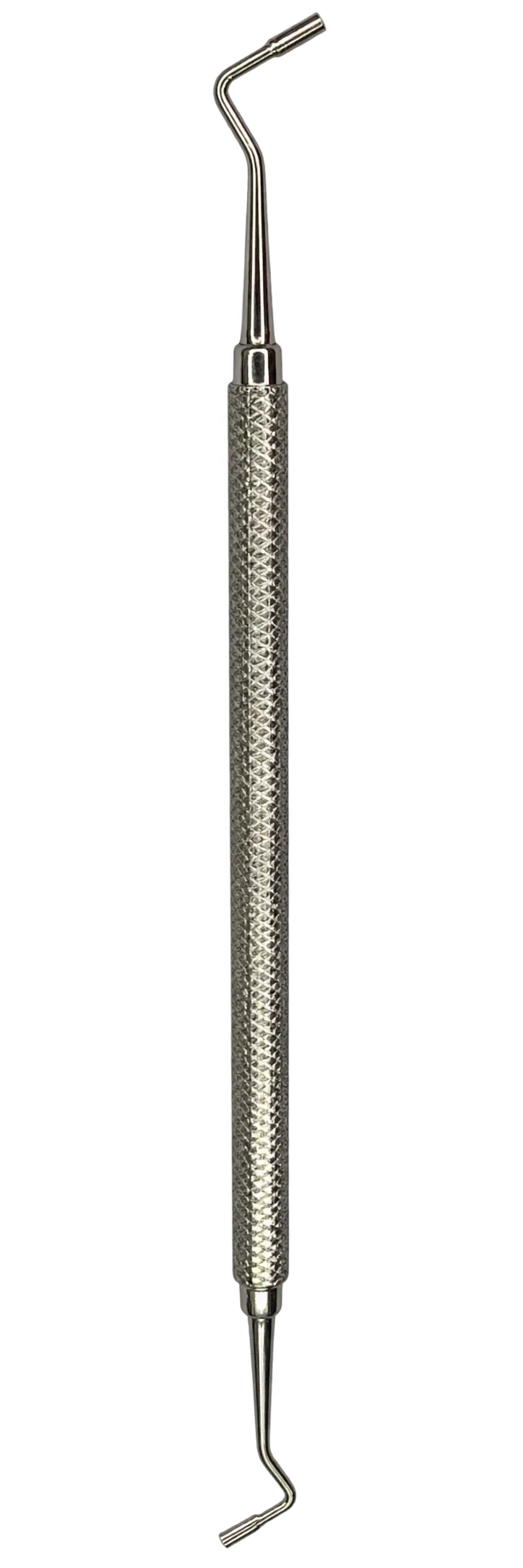
DENTAL PLUGGER / CONDENSER
Design: Features a long metallic handle with a flat or slightly rounded working end.
Material: Usually made of stainless steel.
Tip: Has a flat, circular or slightly tapered condensation surface.
Uses: Compacting and condensing restorative materials into prepared cavities.
Example: Condensing amalgam into a prepared tooth cavity.
Advantage: Helps achieve proper adaptation of restorative material and reduces voids.

DOUBLE-ENDED DENTAL PLUGGER / CONDENSER
Design: Features a long metallic handle with two working ends of different sizes or shapes.
Material: Usually made of stainless steel.
Tips: Has flat, circular or slightly tapered condensation tips.
Uses: Compacting and condensing restorative materials into prepared cavities.
Example: Condensing amalgam into a tooth cavity using different-sized tips.
Advantage: Provides versatility and better access to cavities of different sizes.

DOUBLE-ENDED PLASTIC FILLING INSTRUMENT AND PLUGGER
Design: Features a long metallic handle with two different working ends.
Material: Usually made of stainless steel.
Tips: One end has a flat or paddle-shaped tip, while the other has a rounded or flat plugger tip.
Uses: Placing, adapting, shaping and compacting restorative materials.
Example: Placing and shaping composite resin or other filling materials in a prepared cavity.
Advantage: Combines filling and condensing functions in a single instrument.

SICKLE PROBE / DENTAL PROBE
Design: Features a long, slender metallic handle with a sharp, curved, sickle-shaped working tip.
Material: Usually made of stainless steel.
Tip: Fine, pointed tip designed for tactile examination.
Uses: Detecting dental caries, examining tooth surfaces and identifying irregularities.
Example: Checking for cavities, pits and fissures on tooth surfaces.
Advantage: Helps detect surface defects and assess tooth anatomy through tactile examination.

COMPOSITE PLACEMENT / SHAPING INSTRUMENT
Design: Features a long metallic handle with specially shaped working ends.
Material: Usually made of stainless steel with non-stick coated tips in some models.
Tips: Flat, paddle-shaped or curved tips for precise material placement and shaping.
Uses: Placing, adapting, contouring and shaping composite resin restorations.
Example: Building and shaping composite resin during restoration of a decayed tooth.
Advantage: Allows precise placement and smooth contouring of composite material.
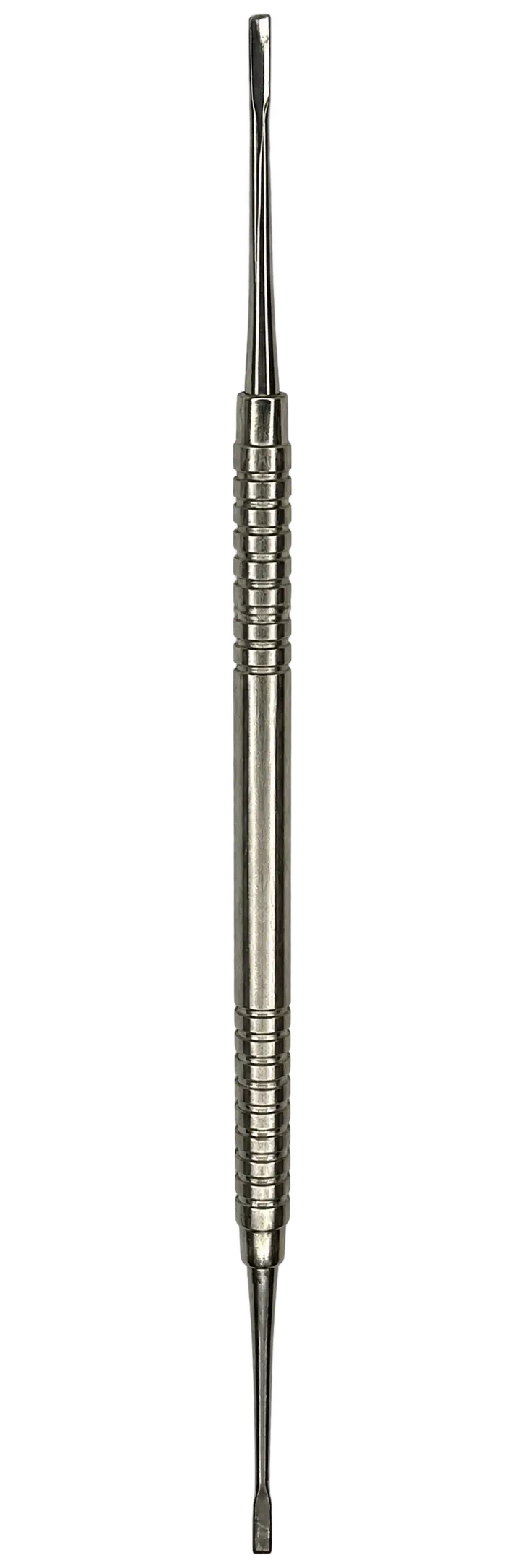
DOUBLE-ENDED DENTAL PLASTIC FILLING INSTRUMENT
Design: Features a long metallic handle with two differently shaped working ends.
Material: Usually made of stainless steel.
Tips: Flat, paddle-shaped or slightly curved tips for handling filling materials.
Uses: Placing, carrying, adapting and shaping restorative materials.
Example: Placing and contouring composite resin or other filling materials in a prepared tooth cavity.
Advantage: Allows precise handling and shaping of restorative materials using a single instrument.
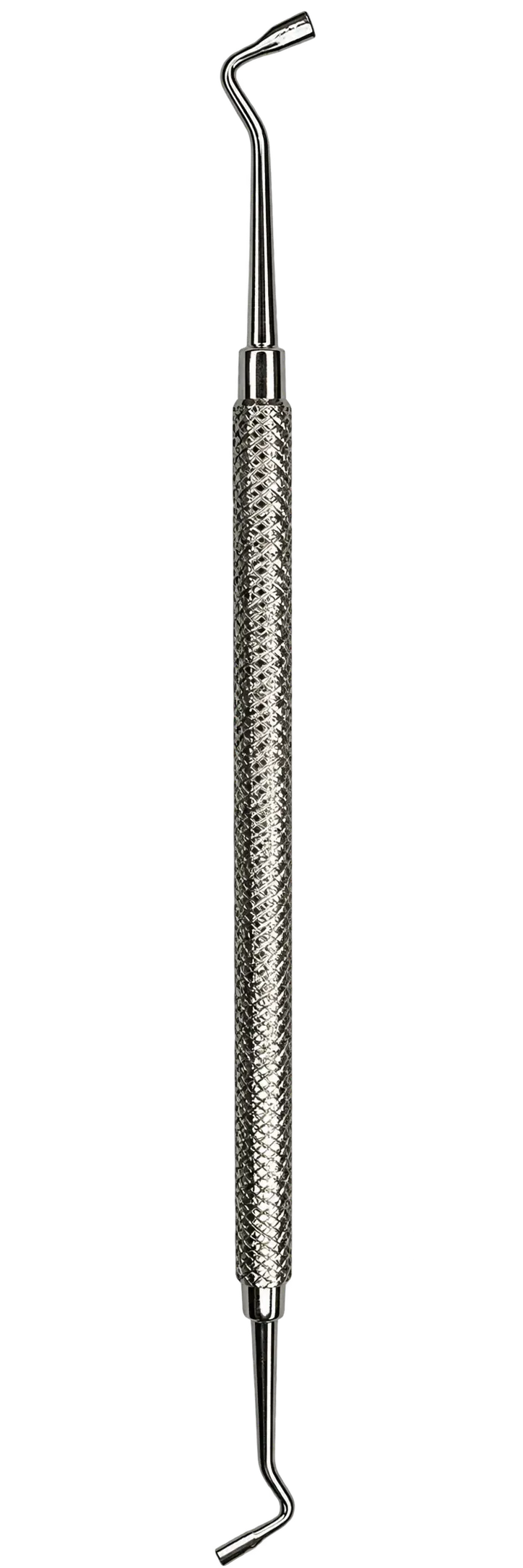
DOUBLE-ENDED DENTAL AMALGAM PLUGGER / CONDENSER
Design: Features a long metallic handle with two working ends of different sizes.
Material: Usually made of stainless steel.
Tips: Flat, circular or slightly serrated tips designed for condensing amalgam.
Uses: Compacting and adapting amalgam into prepared tooth cavities.
Example: Condensing amalgam restoration material into a Class I cavity.
Advantage: Provides effective condensation and helps minimize voids within the amalgam restoration.

PERIODONTAL PROBE
Design: Features a long, slender handle with a thin, calibrated working tip.
Material: Usually made of stainless steel.
Tip: Blunt, rounded tip with millimetre markings for accurate measurement.
Uses: Measuring gingival sulcus depth, periodontal pocket depth and assessing periodontal health.
Example: Measuring a 4 mm periodontal pocket around a molar tooth.
Advantage: Helps detect periodontal disease and monitor gum health over time.

DENTAL BALL BURNISHER
Design: Features a long metallic handle with a smooth, rounded ball-shaped working end.
Material: Usually made of stainless steel.
Tip: Polished spherical or oval-shaped tip for smooth manipulation of restorative materials.
Uses: Smoothing, contouring and burnishing dental restorative materials.
Example: Burnishing and smoothing an amalgam restoration after condensation.
Advantage: Helps improve surface smoothness and adapt restorative material to cavity margins.

HOWARD BONE FILE
Design: Features a double-ended metallic instrument with a broad handle and working ends.
Material: Usually made of stainless steel.
Tips: Flat, elongated, serrated working surfaces designed for filing bone.
Uses: Smoothing, contouring and removing irregularities from bone edges.
Example: Smoothing sharp alveolar bone edges after tooth extraction.
Advantage: Helps create smooth bone surfaces and removes sharp bony projections during oral surgery.
Choose a topic above and continue to the detailed Dental instruments study material.